
What Tasks Can a Virtual Assistant Handle for Me?
14th September 2026 in Uncategorised /by admin
Most business owners underestimate what a virtual assistant can actually take off their plate. The word “assistant” makes people think of basic admin, replying to emails, maybe some scheduling, and stop there. In reality, the range of tasks a capable virtual assistant can handle is a lot wider, and knowing the full scope changes how much value you can actually get out of hiring one.
I’ve worked as a virtual assistant for years across admin work, social media, real estate, property-related work, and lead generation, and I’ve seen firsthand how much time gets handed back to business owners once they realize how much can genuinely be delegated. Here’s a real breakdown of what’s on the table.
Why Most People Underuse Their Virtual Assistant
The biggest reason business owners don’t get full value from a virtual assistant isn’t a lack of skill on the VA’s side, it’s that the owner never delegates beyond the basics. They hand off email sorting and calendar management, then keep doing everything else themselves, even when a self-reliant virtual assistant could easily handle far more.
Knowing the full range of what’s possible is the first step to actually getting your time back, instead of just lightly trimming your to-do list.
Administrative Support
This is where most people start, and for good reason, it’s high-volume, repetitive work that doesn’t require your specific expertise.
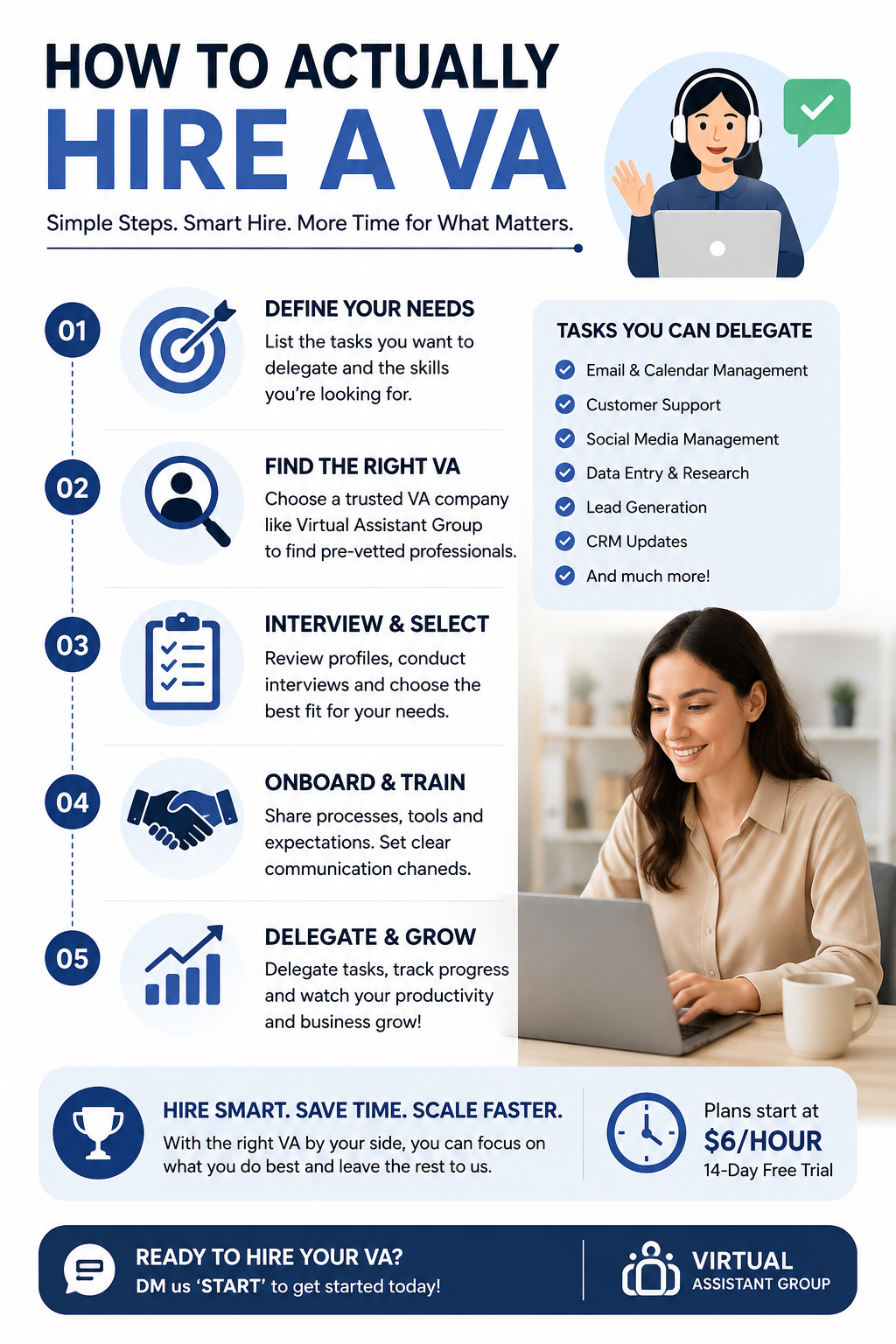
- Inbox management and email organization
- Calendar management and appointment scheduling
- Data entry and document organization
- Travel arrangements and booking
- Research tasks and information gathering
- Preparing reports, spreadsheets, or basic presentations
Social Media Management
A self-reliant virtual assistant can take on far more of your social presence than most business owners assume.
- Scheduling and posting content across platforms
- Responding to comments and direct messages
- Basic content creation, including captions and simple graphics
- Monitoring engagement and reporting on performance
- Researching trends, hashtags, or competitor activity
Lead Generation and Sales Support
This is one of the highest-impact areas a virtual assistant can handle, since it directly touches growth, not just upkeep.
- Researching and building prospect lists
- Outreach via email or social platforms
- Following up with leads and tracking responses
- Updating and maintaining your CRM
- Setting up initial discovery calls or appointments
Customer Care
Customer-facing work is often the task business owners are most hesitant to hand off, but a reliable virtual assistant can manage this well with clear guidelines in place.
- Responding to common customer questions and inquiries
- Managing support tickets or inboxes
- Following up after a sale or service
- Collecting and organizing customer feedback
- Handling basic troubleshooting using a provided script or FAQ
Bookkeeping and Financial Admin
Many virtual assistants, including those specializing in this area, can take on the recurring financial tasks that eat time without needing a full-time accountant.
- Invoicing and tracking payments
- Expense tracking and categorization
- Reconciling basic transactions
- Preparing simple financial summaries
- Organizing receipts and records for tax season
Real Estate and Property-Related Support
This is a category that often surprises business owners outside the industry, but it’s a strong example of how specialized a virtual assistant’s support can get.
- Listing management and updates
- Scheduling showings and coordinating with agents or tenants
- Managing tenant or client communication
- Organizing property documents and lease agreements
- Researching comparable listings or market data
Project and Operations Support
Beyond individual tasks, a self-reliant virtual assistant can also help keep the moving parts of your business organized.
- Coordinating timelines and tracking project progress
- Managing task lists or project boards
- Following up with team members or contractors on deadlines
- Organizing recurring reports or check-ins
- Handling logistics for meetings, launches, or events
How to Figure Out What to Delegate First
If you’re not sure where to start, ask yourself these questions:
- What tasks am I doing regularly that don’t require my specific expertise?
- What’s eating the most hours in my week without directly growing the business?
- What would I hand off first if I trusted the person completely?
That last question is often the most revealing. If hesitation comes from trust rather than task complexity, that’s a sign to focus on finding a reliable, self-reliant virtual assistant, not on limiting what you delegate.
Getting the Most Out of a Virtual Assistant
The businesses that get the most value from a virtual assistant aren’t the ones handing off the smallest, safest tasks. They’re the ones who explain their needs and demands clearly upfront, then delegate broadly across admin work, social media, lead generation, customer care, and beyond, trusting a hardworking, on-time, self-reliant virtual assistant to run with it.
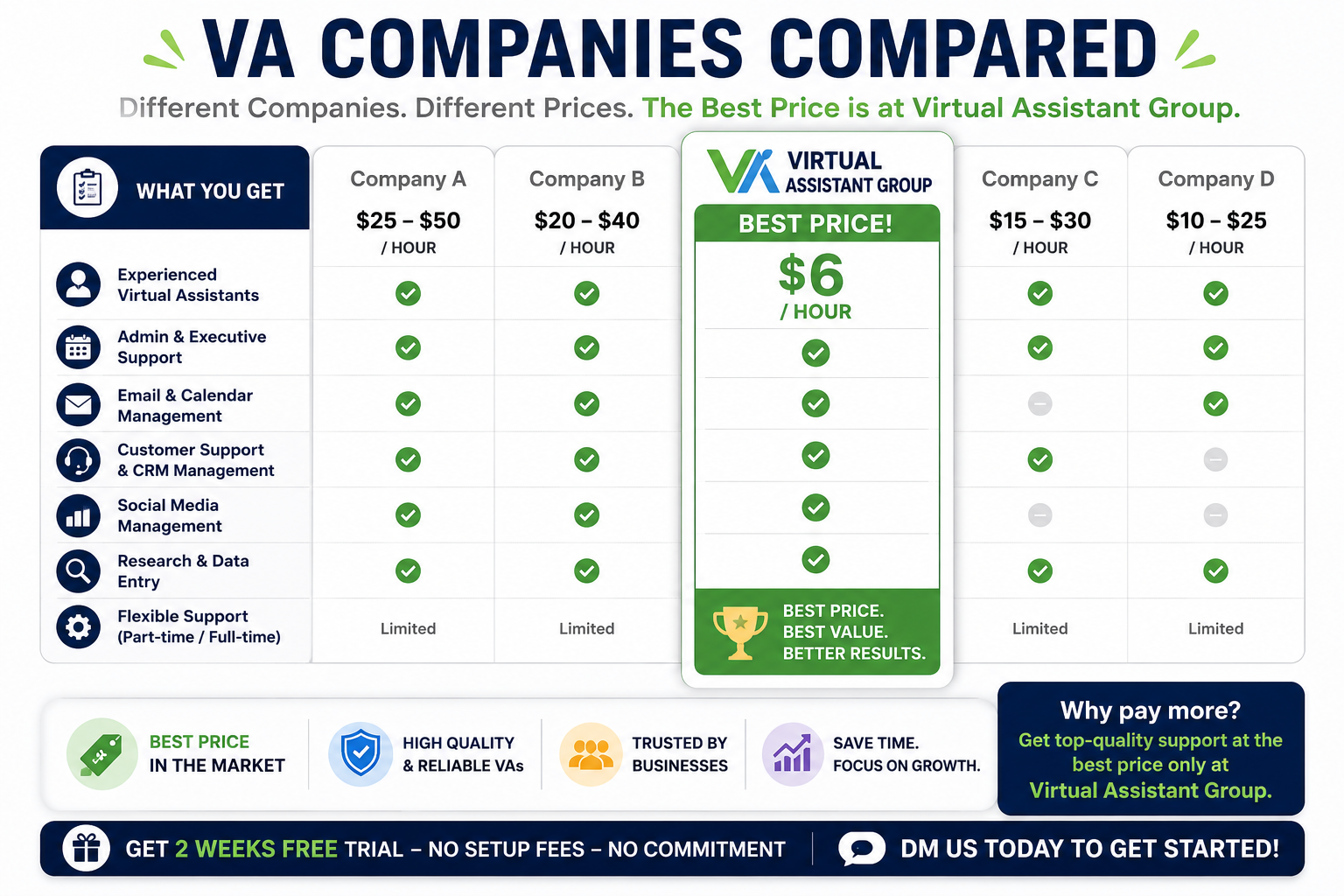
This is exactly the kind of support we provide at Virtual Assistant Group, matching business owners with virtual assistants experienced across admin, social media, real estate, property, lead generation, bookkeeping, and customer care, starting at $6 an hour.
Frequently Asked Questions
What tasks are best suited for a virtual assistant?
Admin work, social media management, lead generation, customer care, basic bookkeeping, and project coordination are among the tasks that consistently save small business owners the most time.
Can a virtual assistant handle customer service?
Yes, many virtual assistants can manage common customer questions, support tickets, and follow-ups effectively, especially with clear guidelines or a provided script in place.
Can a virtual assistant help with lead generation?
Yes. Many virtual assistants handle prospect research, outreach, follow-up, and CRM management, making lead generation one of the highest-impact tasks to delegate.
How do I know what to delegate first?
Start with tasks that don’t require your specific expertise and are eating the most time out of your week. If hesitation comes from trust rather than task complexity, that’s a sign to focus on finding a reliable virtual assistant first.Start with tasks that don’t require your specific expertise and are eating the most time out of your week. If hesitation comes from trust rather than task complexity, that’s a sign to focus on finding a reliable virtual assistant first.
Final Thoughts
Most business owners only scratch the surface of what a virtual assistant can actually handle. Once you understand the full range, from admin and social media to lead generation, customer care, and beyond, delegating stops feeling risky and starts genuinely giving you your time back.